
School meals act as a catalyst for social cohesion in Yemen
The changing view from the headteacher’s office
From her headteacher’s office at Idris Hanbalah School in Yemen, Ms. Ikhlas sees everything – the parents at the gate each morning, the teachers in the corridors, and the children in the school yard. It gives her a comprehensive view of the school’s large community which she says has been “deeply affected by the ongoing crisis”.
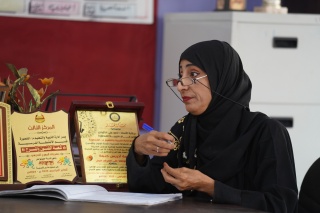
“Many of the families of pupils at the school face extreme poverty,” she explains, “and the pressure on the parents is immense.”
Before Mary’s Meals’ school feeding program was introduced, Ms. Ikhlas would watch the school gate each morning and note which children didn’t come. She knew why. Families carried the shame and anxiety of not being able to feed their children and many parents would keep them at home, rather than send them to school hungry. Those children who did come were visibly affected by hunger and couldn’t concentrate, engage, or connect with one another.
“Inside the school, you could see the fatigue,” explains Ms. Ikhlas. “The stress of survival was tearing at the fabric of our community, breaking the trust between the school and the families.”
The introduction of daily school meals has changed this. Each morning, fresh roti, cheese, and seasonal fruit are prepared on site and distributed to every student. The pupils are learning together, eating together, and growing together. Attendance has improved, children who once sat through lessons in a fog of fatigue are now participating, and parents who once stayed away now engage.
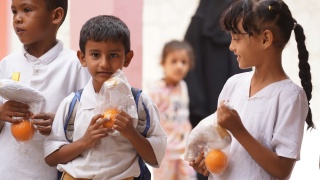
“The meals have completely rebuilt the trust between the parents and the school,” says Ms. Ikhlas. “The school is no longer just a place for lessons; it is a true sanctuary. Parents feel supported, and that builds a strong, collaborative bond between us. We are not just teaching [the learners] to read; we are showing them that their community cares for them.”
On top of the impact on social cohesion, the provision of a daily meal at school is the difference between a child who eats and one who does not. The economic buffer it provides has shielded this vulnerable community from the worst effects of the crisis.
“When parents know that their children will receive a meal, it protects them from the worst economic shocks,” says Ms. Ikhlas. “Even on days when a family has absolutely no money, their child will not go hungry.