
Daily school meals are improving children’s health in Malawi
Meet Tawina, a 13 year-old girl from Malawi
In Malawi, 13-year-old Tawina lives in a family of four. Her parents rely on subsistence farming, and the family faces hunger during the dry season when food shortages are common. “At home sometimes we only eat once a day and we have nothing to eat in the morning before we go to school,” she explains.
Before the introduction of daily school meals, Tawina’s health was fragile. Her diet lacked essential nutrients, and persistent hunger often left her weak and disengaged. She frequently experienced stomach pain caused by hunger and missed school because she was too weak to walk the long distance. “I used to feel very hungry in class and I could not listen properly to the teacher,” she says. “I felt sick all the time.”
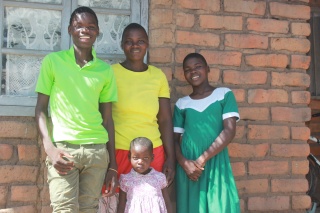
Receiving daily school meals has played an important role in Tawina’s improved physical health and wellbeing. Consistent nutrition has improved her energy levels and helped her put on weight. “When I eat at school, I have strength and energy that allows me to play with my sibling, and I can learn better,” she says. “I don’t feel weak or complain of stomach pains anymore.”

The benefits of school feeding also extend to Tawina’s mental and emotional health. She reports increased happiness, confidence, and motivation. Her concentration and academic performance have also improved, and she interacts more positively with her classmates. “I am happy to go to school now because I know the cup of porridge will give me enough strength to get through the day,” she explains.
Daily school meals are supporting Tawina to grow up healthy and giving her the opportunity to receive an education, which is having a positive effect on the whole family.